If you’re a stylist, understanding at least the basics of color theory isn’t optional, it’s essential. Why? Because color theory is the science behind every single formula you create. Whether you’re lightening, depositing, toning, glossing, or correcting, your results depend on it.
Without color theory, you’re formulating blind.
Every transformation you perform is rooted in how colors interact. If you don’t understand what’s happening beneath the surface, there’s no reliable way to predict whether your finished result will match your client’s expectations. And in a profession built on trust, predictability is everything.
Let’s break down why color theory matters and how you can master it.
The Basics of Hair Color Theory
Color theory is the science and framework for understanding how colors work, interact, and influence one another.
It explains:
- How colors are created
- How they mix together
- How they can neutralize or enhance each other
- How they affect perception and visual balance
At its core, color theory is built around the color wheel, which organizes colors into primary, secondary, and tertiary groups and shows their relationships, such as complementary colors (opposites on the wheel that cancel each other out).
In hair, it's the foundation of what explains what happens when you combine colors, neutralize tones, or remove pigment.
When you understand color theory, you can predict outcomes before you even mix your bowl. You’ll know:
- How your client’s starting canvas will interact with the formula
- What tones will be exposed during lifting
- What pigments will remain after lightening
- How to neutralize unwanted warmth or enhance desired tones
Instead of guessing, you’re making informed decisions.
This knowledge empowers you to:
- Manage client expectations with confidence
- Create a strategic plan from starting point to end goal
- Pivot when clients change their minds
- Avoid common pitfalls, like unexpected brassiness or blorange results
The Power of the Color Wheel
The color wheel should be one of your most-used tools behind the chair.
Complementary colors, those sitting directly across from each other on the wheel neutralize one another. This is the foundation of beginning to understand toning and correcting. Understanding these relationships helps you balance warmth and coolness, create dimension, and refine your gloss formulations.
And here’s something that often gets overlooked: color theory isn’t just about hair. It’s also about how hair color complements skin tone and eye color. When you step back and consider the whole person, not just the hair you elevate your craft. The eyes will give you answers that the hair really never could.
Warmer tones may enhance one client’s complexion, while cooler tones make another glow. Knowing the difference is what separates a good stylist from a great one.
Tips for Mastering Color Theory
1. Become Best Friends with the Color Wheel
Every inspiration photo a client brings you has an underlying tone. Achieving that tone requires precise formulation and precise formulation requires a strong grasp of color theory.
From consultations to final gloss, the color wheel should guide you through:
Gray coverage
Tonal shifts
Tonal balancing
Glossing
Tint backs
Root smudges
Color melts
And everything in between
Reference it constantly. Even experienced stylists glance at the wheel more often than they admit.
2. Take Your Time
Color theory isn’t something you master overnight.
Go slowly. Review concepts repeatedly until they truly click. You’ll make mistakes-everyone does - but mistakes are the best teachers.
Test your theories on mannequins or swatches before trying something new on a client. Experiment. Observe. Adjust. That hands-on learning will build confidence and prevent costly errors behind the chair.
3. Never Forget Underlying Pigments
Every head of hair has underlying pigments that will affect your final result. Ignoring them can completely derail your formulation.
For example:
- Lifting darker hair exposes warm undertones.
- Inadequate neutralization leads to brassiness.
- Misjudging raw lift can sabotage your toning formula.
Understanding underlying pigments allows you to anticipate and counteract them effectively. Whether you’re lifting, refreshing roots, or refining a blonde, analyzing the exposed pigment will make or break your finish.
4. Never Stop Learning
Color theory isn’t a one-and-done lesson. It’s a lifelong study.
There will always be new challenges, new client histories, new product lines, new techniques that push your understanding further. Don’t hesitate to revisit the basics. Keep a color wheel in your back room. You’ll be surprised how often you reach for it.
Once you’ve mastered the fundamentals, invest in advanced education. Deepen your expertise. Refine your eye. Strengthen your confidence.
Final Thoughts
At its core, color theory gives you control.
It transforms guesswork into strategy. It turns uncertainty into confidence. It allows you to deliver consistent, stunning results again and again.
If you want to elevate your work behind the chair, start here. Study the wheel. Respect underlying pigments. Practice intentionally.
Because when you truly understand color theory, you’re no longer formulating blind, you’re creating with intention and purpose.
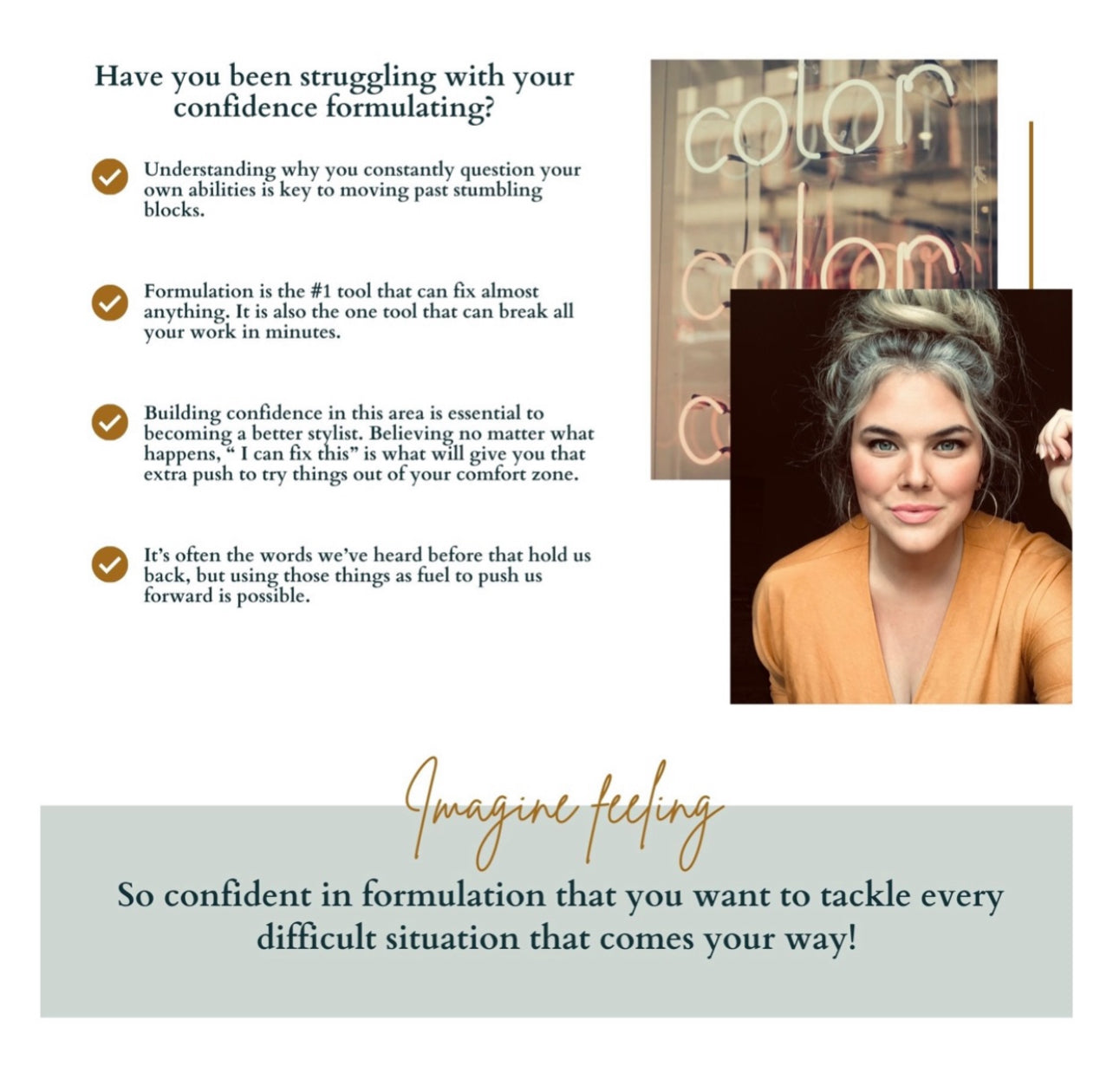
Ready to Build Real Confidence Behind the Chair?
If learning ingredient science and hair behavior changed how you approach retail, imagine what it could do for your color formulations.
I’ve officially launched my NEWEST online course,
The Confidence Behind Formulation: Color Decoded
This course is designed to help you:
- Rewire your entire formulation thought process
- Understand why color behaves the way it does
- Stop second-guessing yourself behind the chair
- Build real, repeatable confidence in your creativity
- Formulate with intention instead of fear or guesswork
When you understand the why behind color, everything shifts, from your results to your confidence, to your earning capacity.
👉 Join below and start formulating with clarity and confidence.